From Construction to Code: My Journey
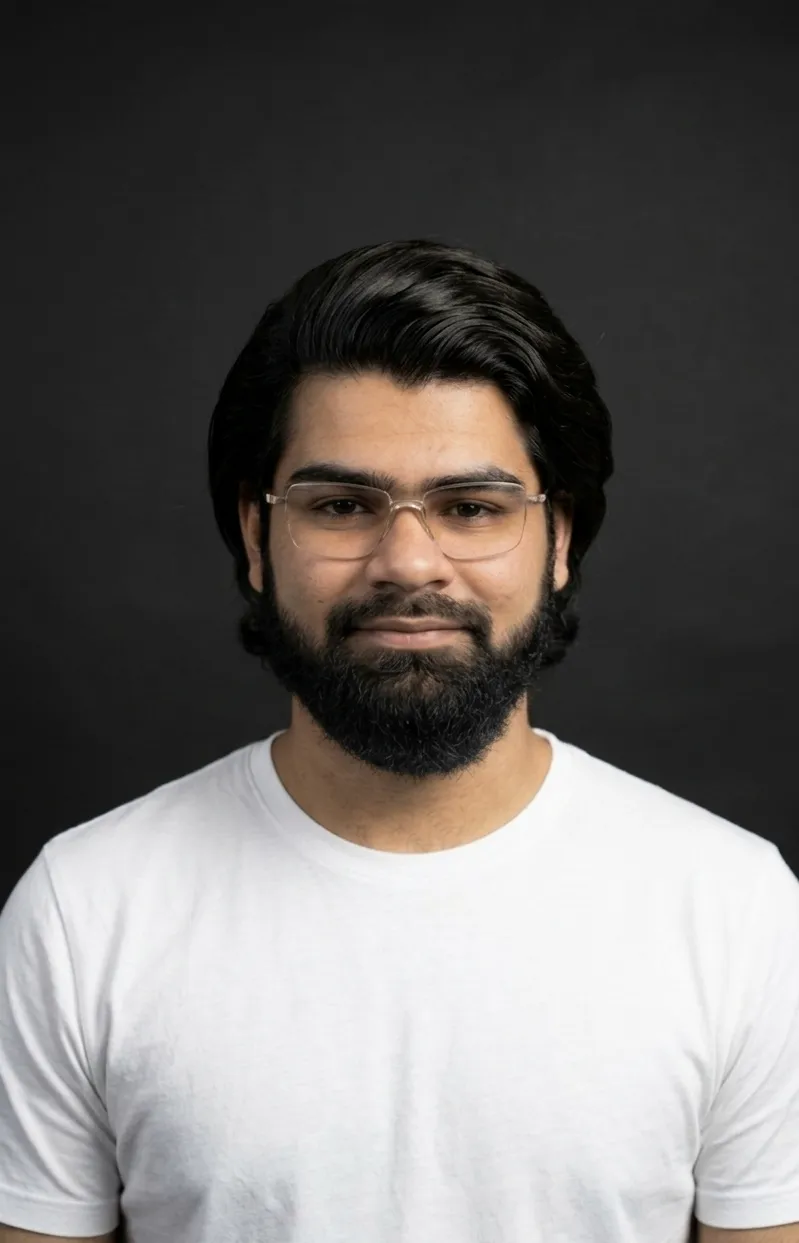
Muhammad Abdullah
Webflow Developer & Founder of BuildoraIO
How I went from laborer to barista to self-taught Webflow developer — and why every stage mattered.
Key Takeaways
- Your past experience — even in unrelated fields — shapes how you solve problems today
- You don't need a CS degree or bootcamp to break into web development
- Every career change teaches transferable skills if you're paying attention
- Building your own product is the fastest way to think beyond just writing code
I didn't start in tech. I started in construction in the UAE — as a laborer. Not the kind of background you see in most developer bios, but it's the truth, and I'm not interested in polishing it.
Story 01 — Construction
My first real job was at NU Projects in the UAE. I started at the bottom — laborer. Showed up early, worked hard, paid attention. Over time I became an Assistant Supervisor, managing labor teams, doing site inspections and reports, coordinating materials, and assisting the Project Manager directly.
That experience taught me something that can't be learned from tutorials: responsibility. When you're overseeing a construction site, there's no undo button. Things have to be right the first time because people's safety and the company's money are on the line. That mindset — double-check everything, own your mistakes, fix them fast — still drives how I work today.
When you're overseeing a construction site, there's no undo button. That mindset — double-check everything, own your mistakes, fix them fast — still drives how I work today.
Story 02 — Hospitality
After construction, I moved into hospitality. I became a barista at WOFL on The Walk at JBR in Dubai — specialty coffee, waffles, high-volume foot traffic. I earned my Official Dubai Barista Certification.
On the surface this looks like a complete career change, but the skills transferred more than you'd think. Hospitality is about reading people: understanding what they need before they say it, staying calm under pressure, delivering consistently. Same skills I use now when working with clients — listen carefully, anticipate needs, deliver reliably.
Story 03 — Technology
I started with absolutely zero web knowledge. No computer science degree, no bootcamp. Just a laptop and the decision to figure it out.
But I didn't do it completely alone. My uncle — Ahmed Qayyum — became my mentor. He taught me everything from zero. Not just the technical stuff, but how to think, how to approach problems, how to grow. He trained me from the ground up, and without him, I don't know if I'd be where I am today.
I learned HTML and CSS through Scrimba — free courses, building projects at night after shifts. Then Webflow University. The visual approach clicked for me because I could see results immediately. From there I kept building, kept learning, kept getting better.
I started getting real client work. Joined Interfacelab as a Webflow Developer, building production websites for clients across industries. Then moved to Jaryah Studios as part of their development team.
Somewhere along the way I built BuildoraIO — my own product, conceived, designed, and shipped entirely solo.
What I Know Now
Construction taught me responsibility. Hospitality taught me service. Web development gave me a craft. Building products taught me how to think beyond code.
Every stage shaped how I approach problems and craft solutions. I don't have a traditional background, and I'm not trying to hide it. The unconventional path is the point — it's why I see problems differently and why I care about getting things right the first time.
The unconventional path is the point — it's why I see problems differently and why I care about getting things right the first time.
Ready to build your Webflow site?
I help startups and agencies ship fast, scalable Webflow websites.
Have a project you're building?
Let's work togetherKeep reading
I Tested Webflow's New Pan & Zoom and MCP — My Honest Review
I've been testing Webflow's new Pan & Zoom canvas and Webflow MCP. Pan & Zoom is genuinely great. MCP depends on the task — ~20% on a from-scratch build, ~70% on CMS edits. My honest review of both.
Read moreI Paste a Live URL Into Claude, Then It Audits and Fixes My Entire Webflow Site
No MCP required at first. I just give Claude a live URL, it finds dead links, missing OG images, CMS gaps, and broken layouts. Then I connect it to Webflow and let it apply every fix. Here's the exact workflow.
Read more